
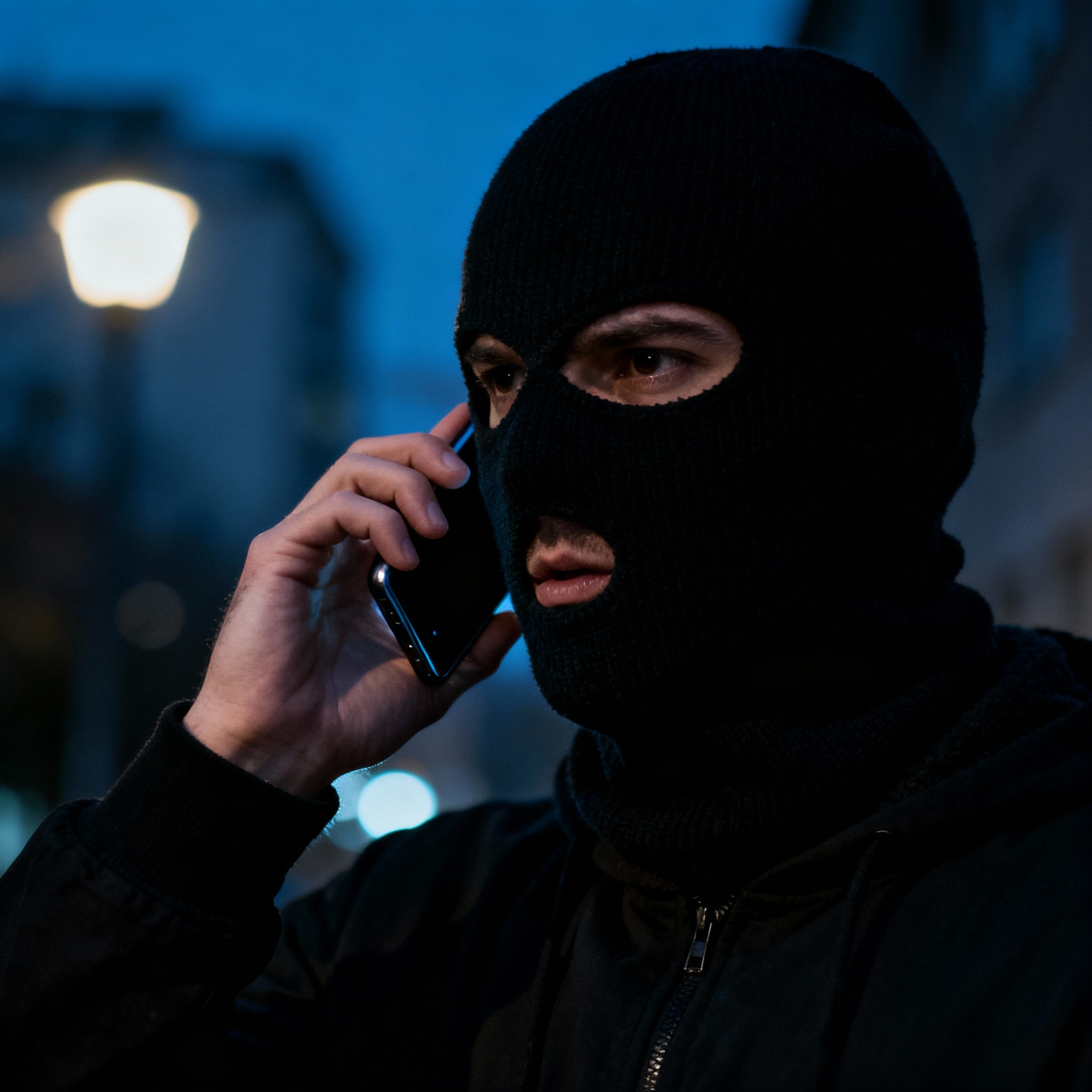
Who could be on the other end of the line?
It seems like we all know that moment when the phone rings and an unidentified or hidden number appears on the screen.
Maybe it’s an important call? Maybe it’s an urgent message? But far too often, it’s a call that ends in disappointment or worse, fraud.
In recent years, telemarketing calls and calls from hidden numbers have become tools in the hands of cybercriminals exploiting our uncertainty. Therefore, identifying a hidden call in real-time can prevent frustration and sometimes even significant financial damage.
Fraud calls are not a matter of bad luck, but rather part of a widespread phenomenon that exploits communication technologies and the enormous amount of information available on the internet. In Israel, as in the rest of the world, criminals and marketing companies spread calls labeled as "unidentified" to bypass blocks.
In many cases, we also share information unknowingly, giving them direct access to our number.
Beyond the inconvenience, hidden calls can lead to real risks: privacy breaches, information theft, and financial losses.
Fast, accurate hidden call identification can be the difference between security and fraud. Understanding the types of fraud and the methods criminals use is the first step in protecting yourself.
Security experts explain that even if you registered for lists like "Do Not Call," you may still receive hidden-call fraud attempts. Criminals obtain our numbers in various ways:
Scanning public accounts on social networks
Data leaks from websites where you previously shared information
Phishing messages impersonating official institutions
Purchasing customer databases from suppliers who sell client data
Using automated software that dials random numbers
Globally, 17% of people reported financial losses due to fraud calls in 2024. In countries like Germany and France, this rate is even higher. Besides economic damage, people waste nearly eight hours per year filtering hidden or spam calls.
Collaboration between governments, telecom companies, and internet users aims to reduce the phenomenon, but citizens themselves can act. One of the most important steps is using a tool that lets you identify callers in real-time and find out who is behind the number. An app like Traceback allows you to discover who is calling, identify hidden calls before answering, and effectively and simply prevent hidden-call fraud.
What types of fraud should you know?
Impersonation fraud (phishing) – a call from a hidden number where a criminal pretends to be a government official, banker, or technician.
Technical support scams – callers asking you to allow computer access due to a non-existent problem.
Investment scams – promising "one-time opportunities" for quick profit that end in theft.
Lottery scams – claiming you "won" but demanding upfront payment or personal details.
Annoying telemarketing calls – sometimes legitimate, but often used for aggressive false offers.
Automated calls – some legal, but others designed to easily and massively catch victims.
How to avoid falling victim?
Register for the "Do Not Call" list to reduce commercial calls.
Request removal from private databases.
Use the Traceback app to identify hidden or unknown calls.
Block suspicious numbers after just one call.
Remember, a hidden call isn’t always dangerous but certainly a warning sign.
With Traceback, you can identify every call, find out who is calling, and regain your sense of security so that even a sudden call won’t unsettle you.
no caller id, caller id, call identifier, Israel, me app, phone caller, harassment, call private number, dial a private call