
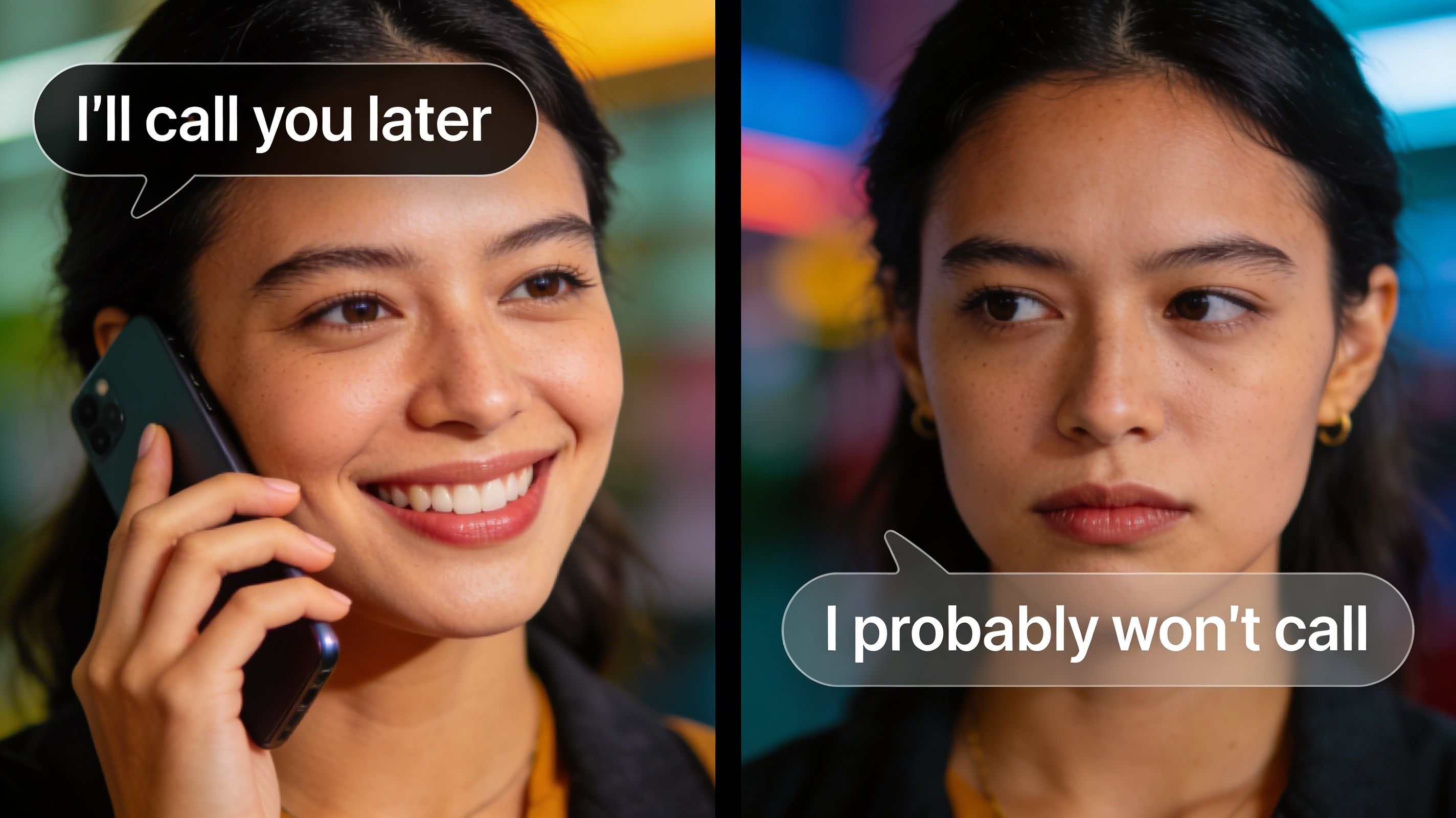
Common Phone Phrases and What They Actually Mean
Let's be honest. Phones have their own language. Not the kind you learn in school — the kind that develops quietly over years of awkward calls, corporate hold music, and texts that say "just saw this!" three days later.
It's a dialect of polite half-truths. Everyone speaks it. Nobody questions it. Today, we're finally translating it.
1. "I Was Just About to Call You"
What it actually means: What extraordinary timing this happens to be.
There is zero evidence to support this claim, and yet we accept it every single time without hesitation. Why? Because it's convenient. It signals that the other person is available, willing, and ready — so the conversation can happen now without anyone feeling like they've been chasing someone. It's the most harmless fiction in all of phone communication, and it works precisely because we've all silently agreed to let it slide.
2. "Can You Hear Me?"
What it actually means: I am quietly reconsidering my commitment to this conversation.
Poor reception is the perfect socially acceptable escape hatch. The beauty of bad signal is that it's completely unverifiable. "Hello? You're breaking up—" Is the call actually dropping, or is the person emotionally dropping out? The ambiguity is the whole point. We may never know, and honestly, some people prefer it that way.
3. "Sorry I Missed Your Call"
What it actually means: I saw it. I evaluated the situation. I made a deliberate, conscious choice.
In 2026, nobody misses calls in the traditional sense. We see the screen light up. We read the name. We stare at it for four full seconds and make a judgment call — no pun intended. If no voicemail is left and no text follows, the mystery only deepens. Who was it? What did they want? Should you call back?
You don't have to sit with that uncertainty. Traceback is an Israeli app that identifies unknown and private callers — so instead of anxiously waiting for a clue, you get a clear answer on who called and why. It's a practical tool built for exactly this kind of modern phone frustration.
4. "I'll Call You Right Back"
What it actually means: I need to exit this conversation immediately, and this is the cleanest way to do it.
This is the emergency exit of phone calls. "Right back" is a beautifully flexible unit of time. It can mean five minutes. It can mean after dinner. It can mean the unspoken mutual agreement that this conversation simply never happened. It's not malicious — it's self-preservation. Sometimes you're just not ready for the conversation that's clearly coming your way.
5. "Due to Higher Than Normal Call Volume…"
What it actually means: This is completely normal call volume. It has always been this volume.
Call centers have been experiencing "higher than normal" traffic since roughly the invention of the telephone. This phrase exists for one very specific reason: to gently encourage you to hang up, visit the FAQ page, and solve your own problem. It's often followed by "You're welcome to chat with our virtual assistant instead!" — which, as we all know, will understand absolutely nothing you type.
6. "Just Following Up"
What it actually means: You ignored me, and I have noticed. More than once.
Few phrases carry as much quiet pressure as "just following up on my previous message." The word "just" is doing enormous heavy lifting here — it's designed to sound casual while communicating something far more pointed. By the third follow-up, nobody is "just" anything anymore. That ship has sailed.
7. "Let's Circle Back"
What it actually means: I would like this topic to quietly disappear for an indefinite period of time.
Corporate phone culture has elevated avoidance to a near-professional skill. "Circling back" sounds forward-thinking, even strategic — like you're so locked in on priorities that you simply can't address this right now. In practice, it's a polished way of saying: this conversation is effectively over and I am choosing not to acknowledge that. The Israeli Innovation Authority might push back on this one, but in meeting rooms across Tel Aviv, things are being "circled back to" on a daily basis.
8. "Your Call Is Important to Us"
What it actually means: You are somewhere between position 30 and 60 in a queue, and no one is rushing.
We saved this one for last because it deserves a moment of reflection. If your call were genuinely important, the wait wouldn't outlast a full lunch break. Instead, you're bonding with a looping instrumental track while reconsidering your life choices. The Israel Consumer Council (מועצת הצרכנות) has long highlighted the frustration Israeli consumers face with telephone service standards — and yet, somehow, the hold music plays on.
Why We All Talk Like This
These aren't really lies. They're what communication researchers call social lubricant. Linguists and communication scholars at the Hebrew University of Jerusalem have studied how indirect language helps people navigate social friction, avoid confrontation, and keep relationships intact without the sharp edges that blunt honesty can sometimes leave behind.
Phone calls are uniquely high-pressure. They arrive without warning, demand real-time responses, and give you no chance to carefully compose your thoughts. That's a lot to ask of someone mid-task, mid-meal, or mid-thought. So we wrap our messages in a little extra cushioning, and over time, those phrases become part of a shared script that everyone carries around without even realizing it.
The Real Issue Isn't the Phrases
We don't actually mind polite language. What bothers us is when we genuinely can't tell if it's sincere.
"Your call is important to us" — is it, though? "Sorry I missed your call" — did you really? "I was just about to call you" — were you actually?
The discomfort isn't the phrasing itself. It's the uncertainty sitting underneath it. Nobody truly hates phone calls — we just dislike not knowing what we're walking into. Who's calling? What do they want? Is this urgent or can it wait?
That's exactly the kind of uncertainty that Traceback was built to cut through. As an Israeli caller identification app, it tells you who's on the other end before you even decide whether to pick up — turning that moment of hesitation into a moment of actual clarity.
The Bottom Line
"Your call is important to us" is probably not personal. "Let's circle back" probably won't happen. "I was just about to call you" probably wasn't entirely true.
And honestly? That's fine. Phone culture comes with its own built-in script, and we all play a part in it. The trick is not taking the phrases too seriously — they're equal parts courtesy, habit, and survival instinct. What you can take seriously is knowing who's actually on the other end of the line. That part, at least, doesn't have to be a mystery anymore.